


Images can be misleading…
Always check what you see!
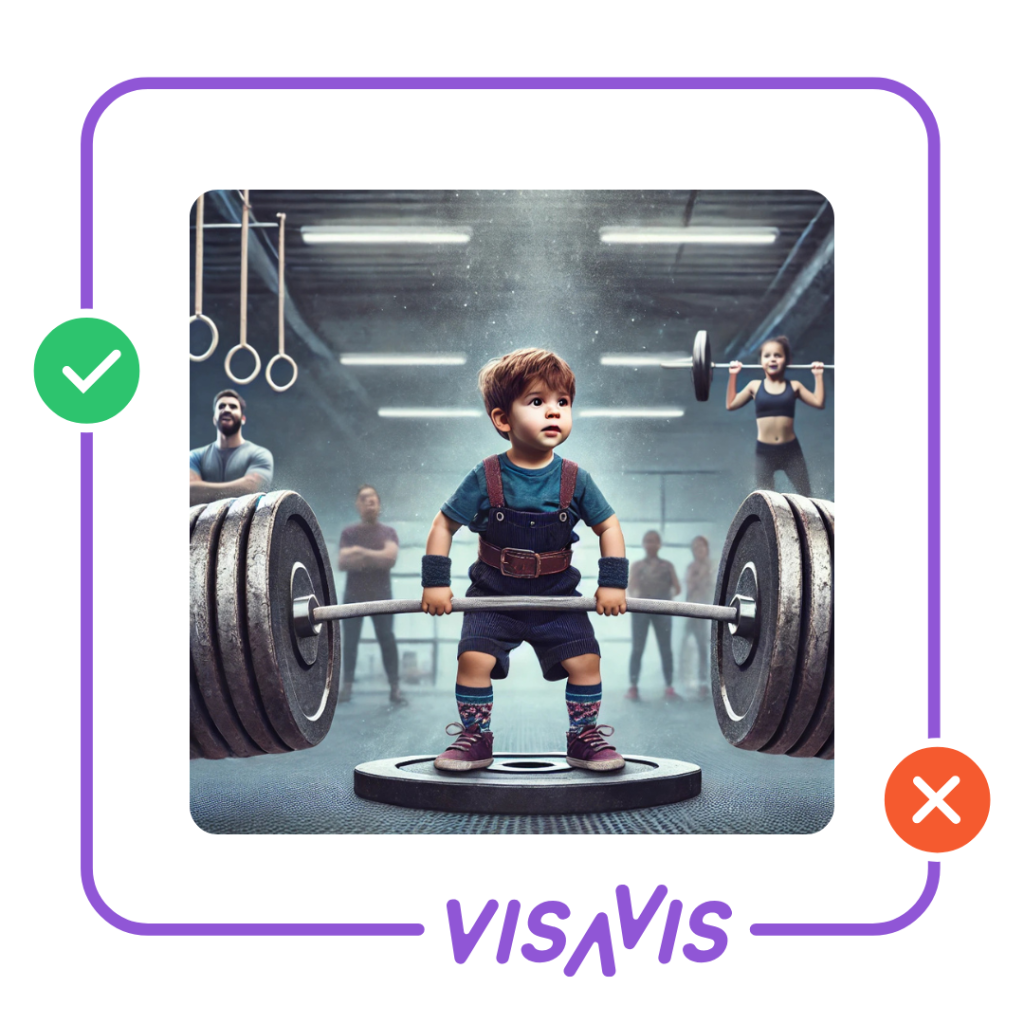
I sometimes doubt the images or videos I see, because…
- Today, anyone can post images online, without any checks or explanation.
- Images and videos are often shared without context.
- The same image sometimes reappears in connection with a different news event.
- Photos and videos can be edited, manipulated or even created entirely by AI.
- I scroll, judge and share quickly, often without thinking.
- There is an overabundance of information and images, making it difficult to know what is reliable.
- Because of the amount of fake news, I lose trust and start to doubt everything.
Recognising and understanding misleading images and videos
Images and videos often say more than words. Yet they can increasingly mislead us. When creators deliberately use images and videos to spread misleading information, we call this visual disinformation.
→ Images or videos convey something different from what the creator intended.
Example: resharing a video of demonstrators protesting against Covid measures in 2020 as if it were a recent protest against migration policy.
→ Images or videos have been used with an incorrect time or place context
Example: resharing footage of the 2004 tsunami in Thailand with the message that another tsunami has occurred.
→ Photoshopped images
Creators add elements, remove something, or crop an image to create a different impression.
Example: a photo in which a person has been removed from the image.
→ Deepfake videos
Videos created using AI in which someone says or does something they never actually said or did.
Example: a video in which a politician appears to make a statement he never made.
→ AI-generated images
Images or videos that are not based on reality, but are entirely created by generative artificial intelligence.
Example: a video in which two arch-enemies appear to embrace, or a video of an elephant riding a bicycle.
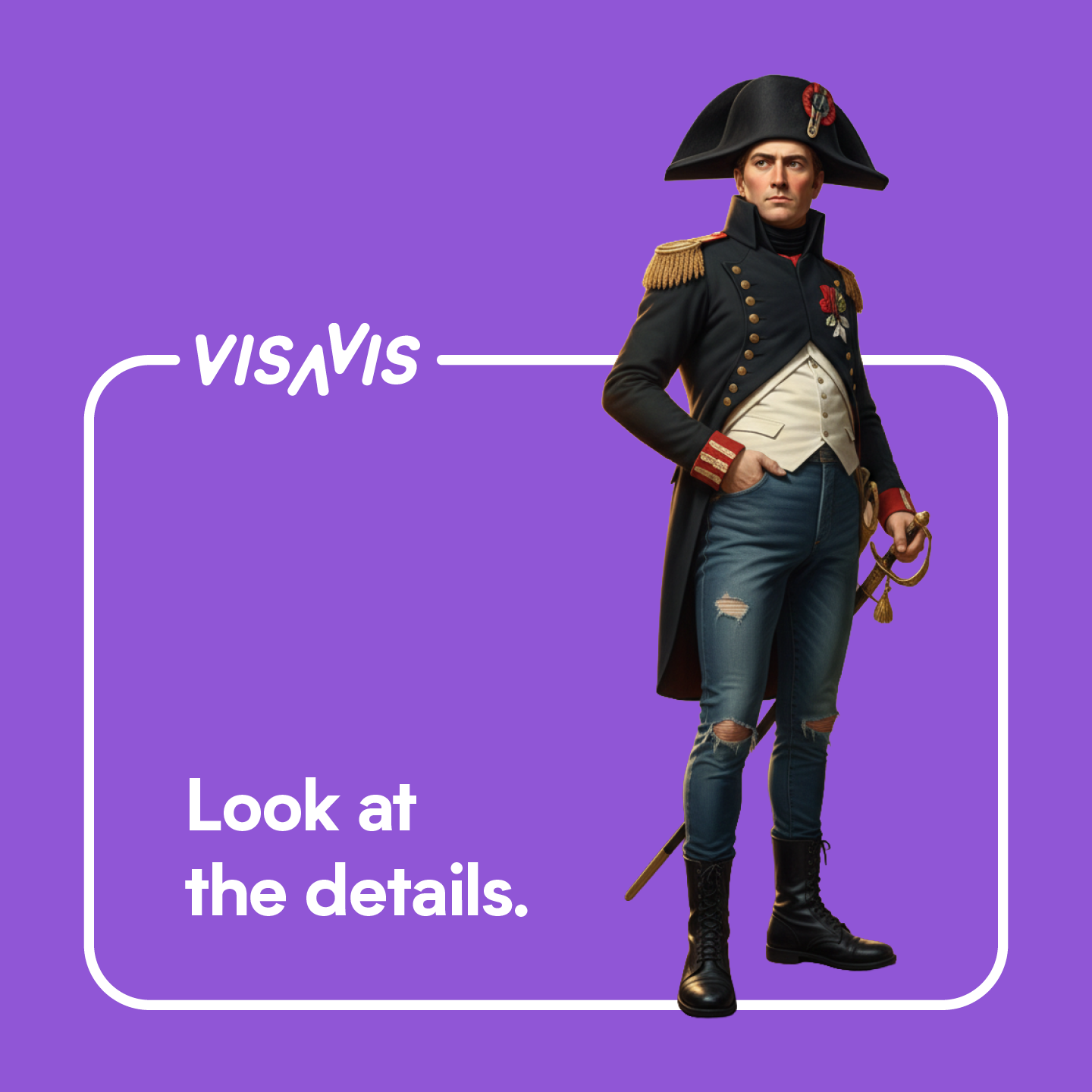
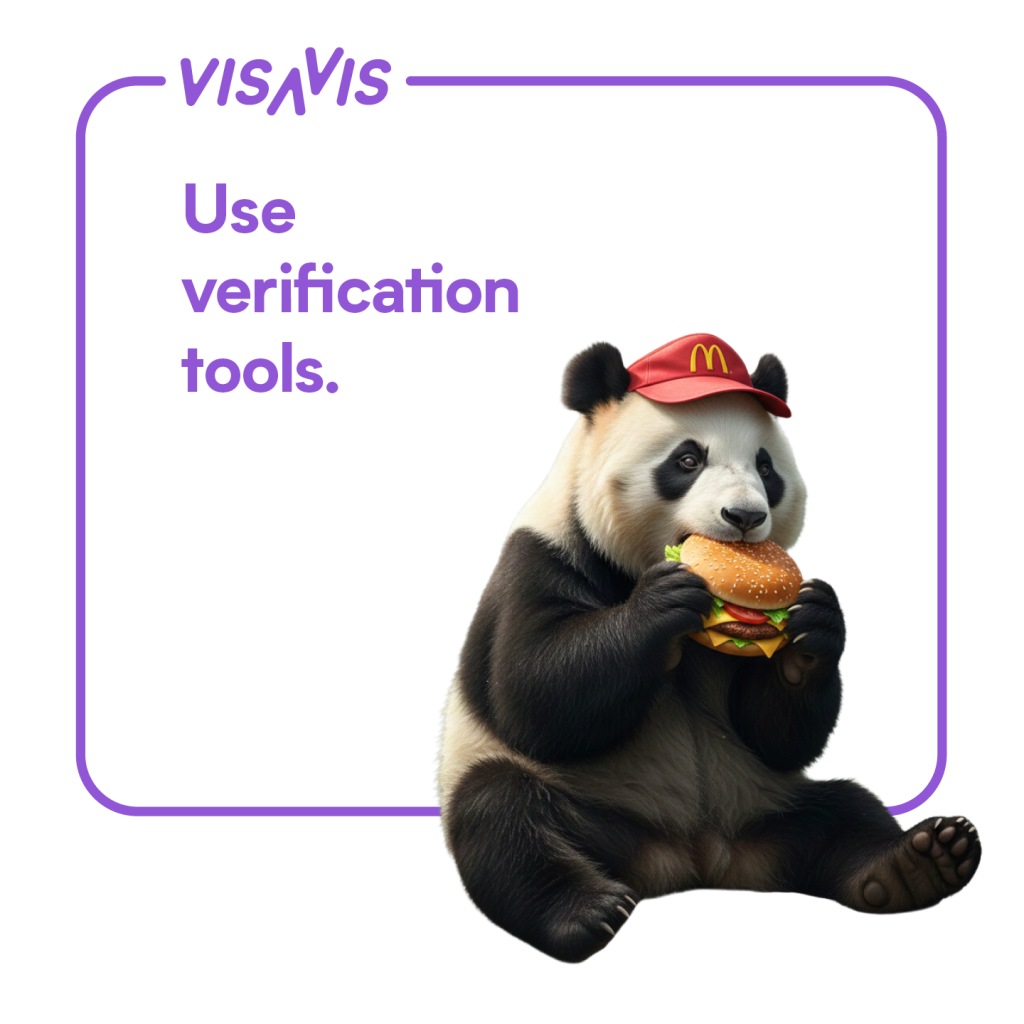
6 tips for fact-checking images
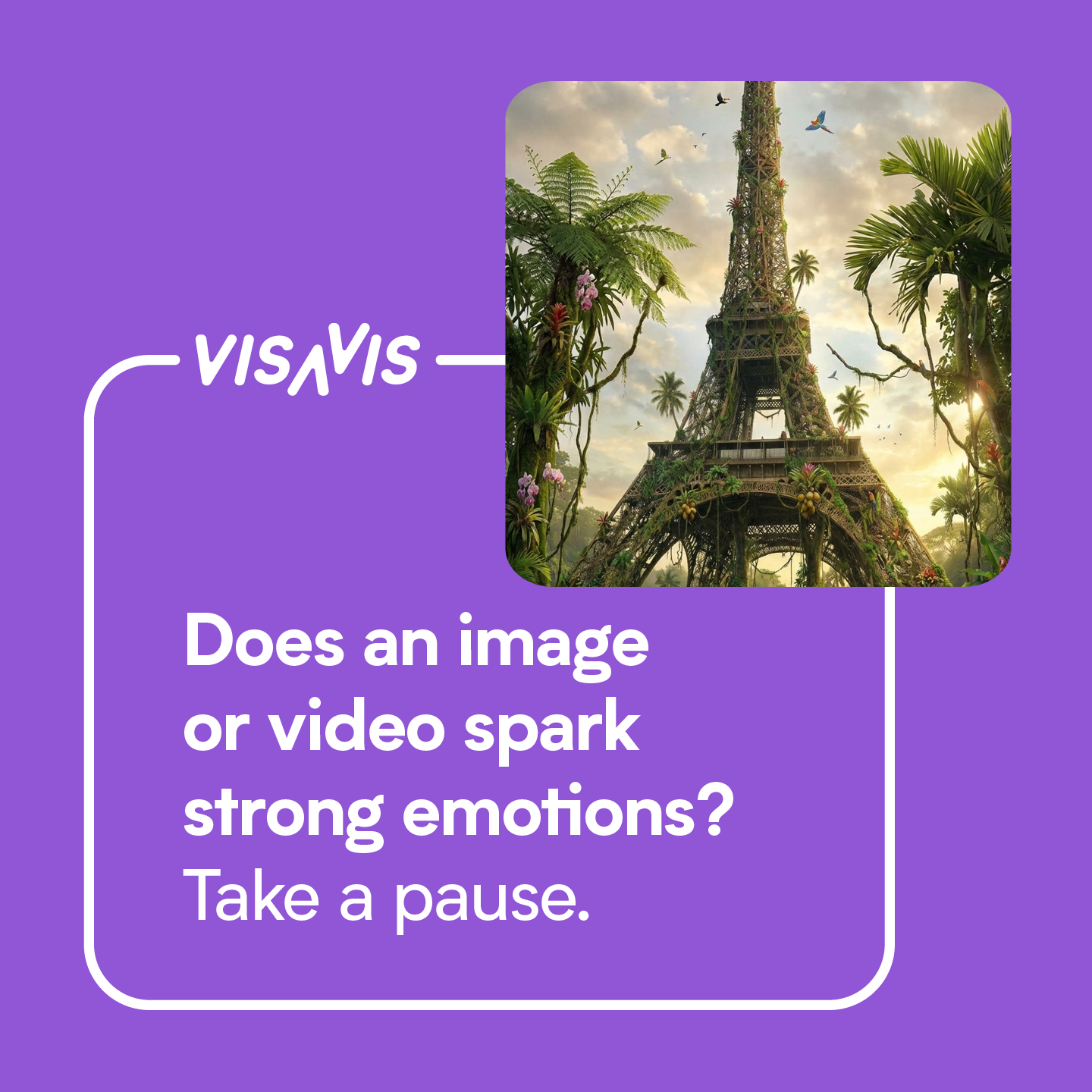
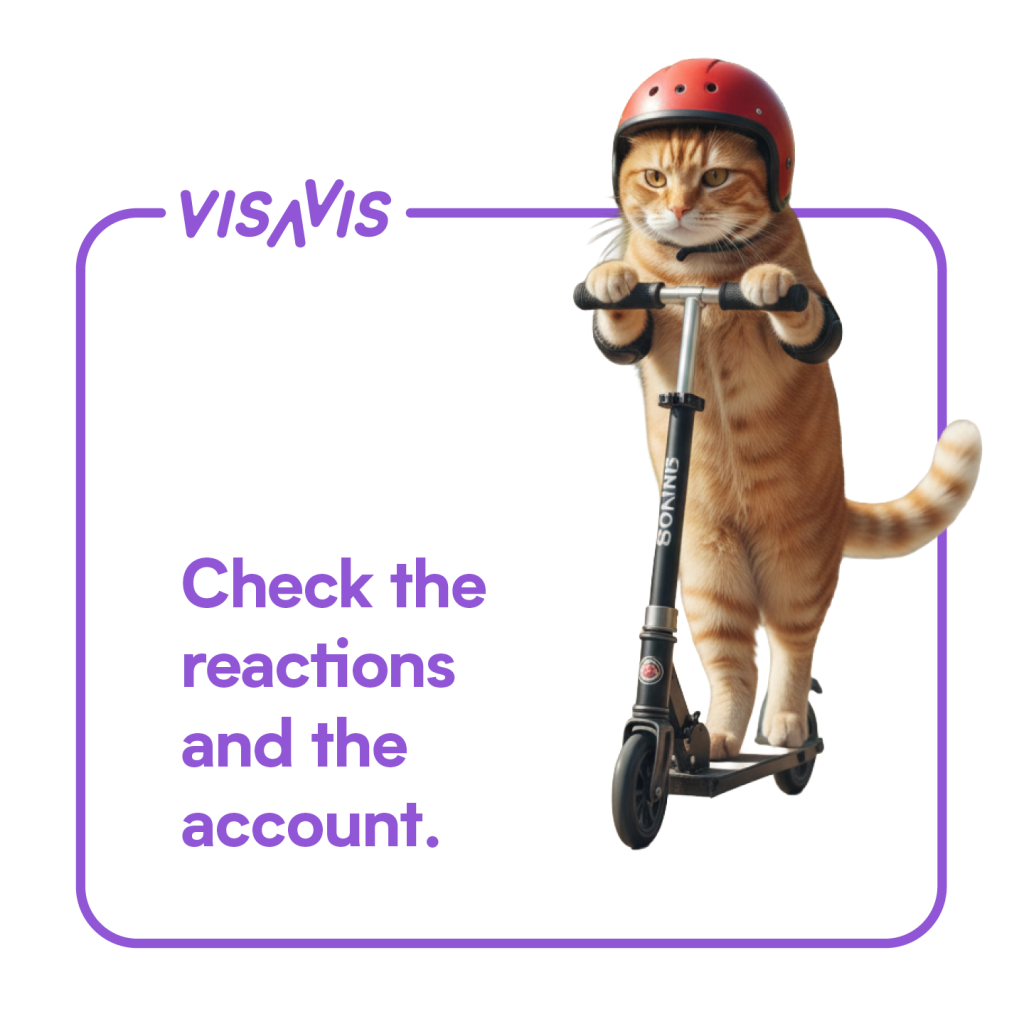
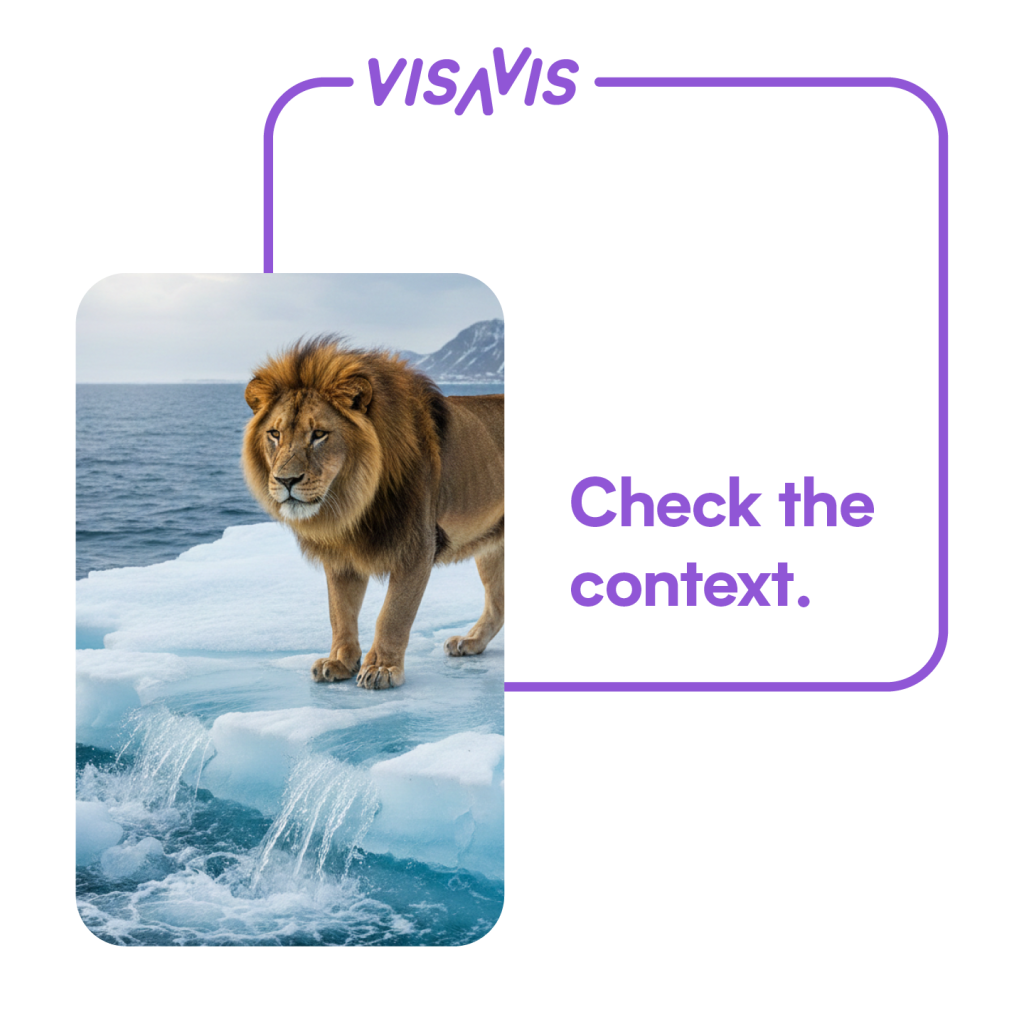

Got it?
Test yourself with short exercises and discover how well you recognise misleading images. You will see real examples and learn step by step what to look out for.
Support the campaign
Would you like to support the campaign?
Download the illustrations of the 6 tips and share them on your own social media. Or, as an organisation, add your endorsement to the campaign.
We are proud to be supported by the following organisations and projects:

This campaign is part of the project VISAVIS, funded by the European Media and Information Fund. The author(s) bear(s) full responsibility for all content supported by the European Media and Information Fund, and it does not necessarily reflect the views of the EMIF and the fund’s partners, the Calouste Gulbenkian Foundation and the European University Institute.